
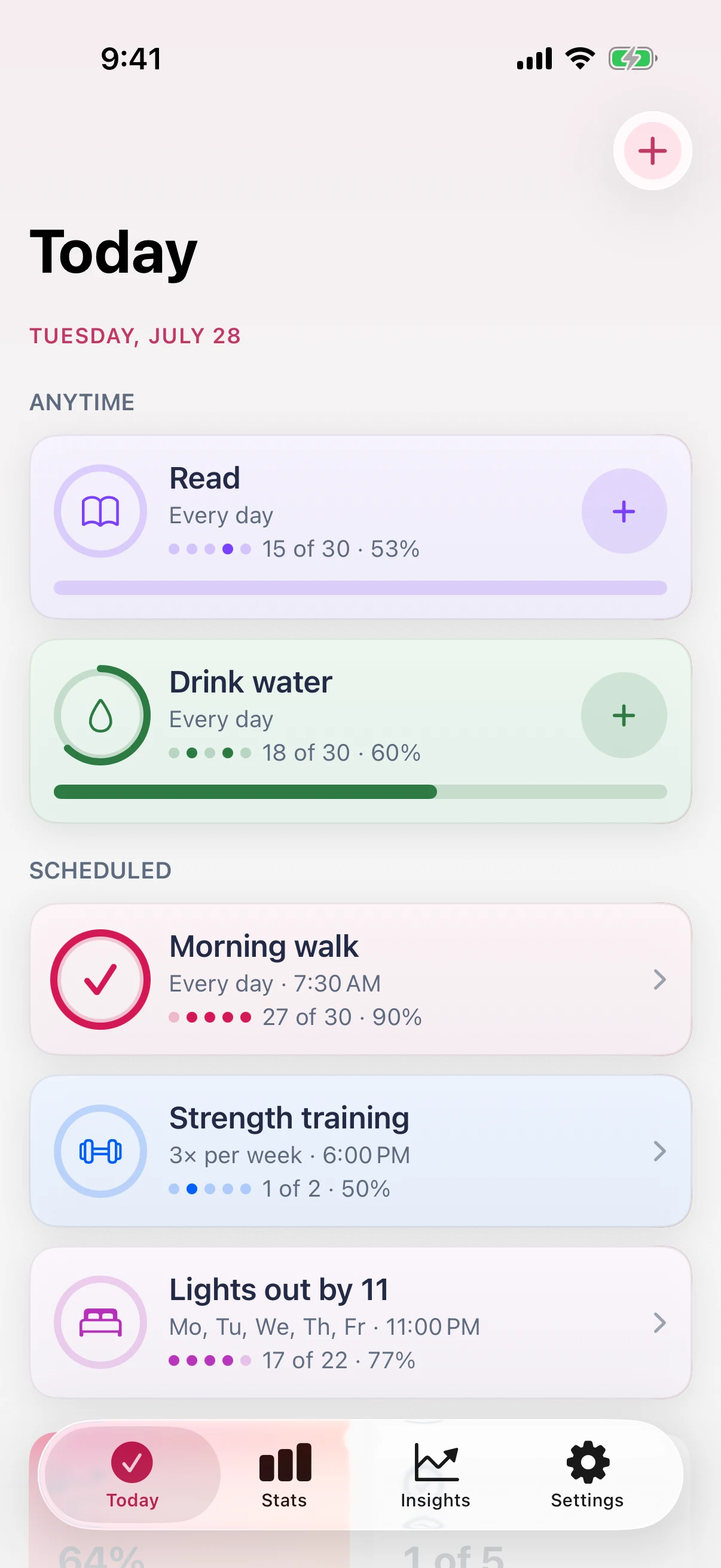
1. Start smaller than your ambition
Choose one to three routines that matter now. A short list makes it easier to notice whether the system is working and reduces the setup work that can feel productive without changing behavior.
Make the first version easy to complete. Read for ten minutes is clearer than read more. Walk for fifteen minutes is easier to repeat than get fit. You can increase the goal after the action begins to feel normal.
2. Define what counts
A binary habit has a clear yes-or-no finish: take medication, make the bed, or call a family member. A measured habit records an amount: pages read, minutes practiced, glasses of water, or kilometers walked.
Write the habit so tomorrow’s check-in requires very little interpretation. If you cannot tell whether it happened, the definition is probably still too vague.
3. Choose the rhythm, not the fantasy
Daily schedules work for compact actions that genuinely belong every day. Selected weekdays work for routines tied to a weekly calendar. Times-per-week goals create flexibility when the exact day can change.
The most motivating schedule is the one you can believe. A realistic three-times-per-week plan produces better information than an aspirational daily plan you repeatedly ignore.
4. Put the reminder near the opportunity
A reminder is useful when it arrives at a moment when the action is possible. Connect it to an existing cue: after breakfast, when work ends, or before the evening wind-down. Too many notifications become background noise, so enable them selectively.
5. Check in quickly, then leave
Logging should take seconds. Complete a binary habit in one tap or record the measured amount without opening multiple screens. The goal is to preserve an accurate history without interrupting the routine itself.
6. Review the pattern once a week
Look at completion rate, recent consistency, streaks, and the situations around missed check-ins. Keep what is working. Reduce or reschedule what is repeatedly difficult. Pause routines that no longer matter instead of letting them create noise.
A weekly review turns tracking into learning. The useful question is not whether the record is perfect; it is whether the next week can be made more achievable.